Friday, 6 March 2020

The ‘Bloodshot’ Reading List

This is part of our new series The Reading List, a monthly column in which we encourage you to take your enthusiasm for a particularly groovy film and direct it into a wide array of extracurricular studies.


We could be on the verge of another cinematic universe. Bloodshot, the new sci-fi actioner starring Vin Diesel, hits theaters this month, and with it comes a massive catalog of potential IPs. Sure, sure, sure, you’ve heard it all before, but no one has proven equal to what Marvel Studios has done with their Infinity Saga. Fair enough.

The Valiant Comics universe has not bitten off more than they can chew. They’re following in Iron Man‘s footsteps. Putting all their weight into one, well-executed flick with their fingers crossed that it will find a hungry audience. If Bloodshot does any kind of business, the potential for a spider web of content is readily available.

Really though, what does it matter if we get another Bloodshot movie or not? The comics are all you need. The character originally spawned from the Eternal Warrior series in 1992, and he was a beastly little mercenary featuring some tricked out techno powers. He proved immediately popular and snagged a series of his own complete with a chromium cover.

Bloodshot was a product of his time, but in recent years, Valiant Comics has lured lots of tantalizing talent to take their crack at the Living Weapon. The result is some shockingly good comics that deserve your attention.

This month’s Reading List is designed to give you more than a taste of Bloodshot. It’s a full-course meal looking to satisfy your curiosity and set you up as a life-long Bloodshot maniac. Let’s chow down.


Bloodshot

Bloodshot Comic Panel

The original comic book series, written by Kevin VanHook and penciled by Don Perlin, has everything you need to know about the character before walking into the movie. Resurrected by the mad scientists over at Project Rising Spirit, Angelo Mortalli is transformed into the ultimate killing machine when his blood gets pumped full of nanites. These little machine critters allow the assassin to repair any wound, talk to computers, and alter his musculature to combat any threat. The only downside: he has no memory of the man he was before the monster rose within him.

The comic is dated, and your tolerance for it will depend on how much you groove on the ’90s ultra machismo. Bloodshot kills a lot of dudes, and Perlin’s art treats the violence in a clear, clinical manner. The Valiant style of the day reads as stiff for some, but for Bloodshot, Perlin elevates the character’s matter-of-fact approach to the business of killing and the revenge that comes after.


Bloodshot: Definitive Edition
Bloodshot Definitive Edition

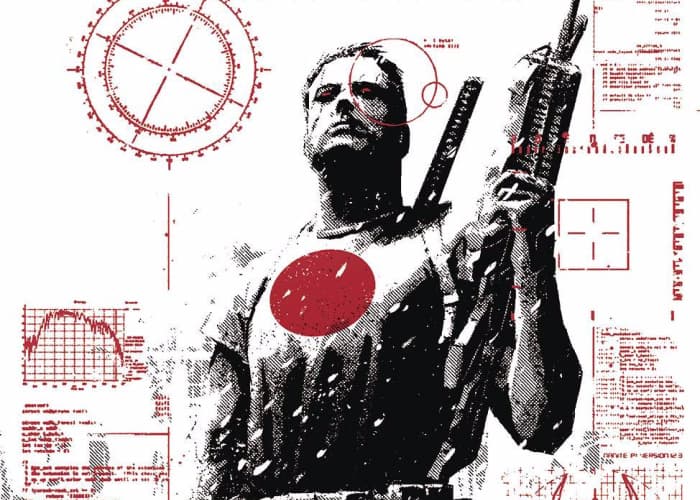
If you’re less inclined to catch up on all the Bloodshot history, and you’re looking for a series with more modern sensibilities, then the Definitive Edition trade paperback is your best bet for wading into the wide world of gnarly Bloodshot mythology. Published in 2012 after the Valiant Universe rebooted in the wake of Acclaim Comics’ bankruptcy, the third volume of Bloodshot comics was spearheaded by crime novelist Duane Swierczynski and features a bevy of talent rotating through art duties. The comic is not some gritty re-imagining, as the original was anything but clean, but it couches all the delicious absurdity of the concept into some form of recognizable black ops tragedy.

Based on what we’ve seen from the trailers of the upcoming film, it appears most of Vin Diesel’s take on the character comes from what Swierczynski set up in these first thirteen issues. Bloodshot breaks free from his programming and goes on a kill-crazy rampage on a mission to discover his identity and slaughter the man responsible for his Frankenstein-like existence. Swierczynski sells the pain of the character, but even better, he’s a sick little puppy when it comes to conjuring vicious acts of vengeance.


Bloodshot Reborn

Bloodshot Reborn

Three years later, Bloodshot is once again relaunched with a new number one on its cover. Jeff Lemire, the much-heralded creator of Sweet Tooth, Essex County, and Black Hammer, takes over as series writer, and with him comes a whole lotta pathos. The nanites have been removed from his system. Bloodshot is no longer the ultimate killing machine, and he’s attempting to live a peaceful life in isolation. Until a group of assassins who happen to look very similar to his old appearance starts murdering folks across the nation. Bloodshot pulls himself out of retirement and goes on the hunt.

Bloodshot Reborn is the series where I really started to feel for the monster hiding under the mask of humanity. Lemire exceptionally captures the guilt, pain, and loneliness of the character, and when the violence must appear, it does so with a tremendous sense of apocalypse. Death is the end of everything. When Bloodshot deals it here, he knows the finality which he strikes. Bloodshot Reborn feels impossibly far removed from the ’90s comics from which it came to life. Here is the comic book you’ll start slapping in your friends’ laps, begging them to take a look at what Valiant Comics is cooking.


Bloodshot: Salvation

Bloodshot Salvation

Jeff Lemire, with artists Mico Suayan and Lewis LaRosa, digs into the rot of America and uses Bloodshot to explore the cancer of gun violence spreading throughout the country. You might ask, “What the hell?” but only Lemire would have the guts or gall to use one of the most ridiculously brutal comic book characters to make a statement on our culture of bloodlust.

Bloodshot finds love in the arms of his girlfriend Magic and hope in the form of their unborn child. As you know, serenity will never last in this line of work. Magic’s family of fundamental lunatics comes out of the cold, determined to reclaim their lost daughter and take hold of the child yet-to-be. Flashforward eight years, Bloodshot’s daughter Jessie is alive and carries all the same attributes of her father. She’s on the run from a clan of killers called Omen, destined to upend the nightmare America beneath her feet.

Next Page

Thursday, 5 March 2020

The Granddaddy of Body Horror was a German Expressionist Film

Welcome to Horrorscope, a monthly column keeping horror nerds and initiates up to date on all the genre content coming to and leaving from your favorite streaming services.


Every horror fan has that one thing that makes their stomach do backflips. That one weapon, body part, or setup whose appearance draws fingers over eyes and elicits a guttural “oh god no” from even the hardest horror geek. For some, it’s anything to do with hands and nails. For others, it’s razors. These sorts of scenes activate some arcane neural pathway from childhood; that buzz you used to get watching cable after midnight and stumbling across something evil and obscene that leaves your skin covered in an icky, imperceptible film, feeling like you’ve come into contact with something truly forbidden.

March, it turns out, is a time for the icky and uncomfortable. All my picks for this month are unconventional body horrors that are in some way, a little gross, a little sticky, and absolutely corporeal. This month, I’m shouting out two newer flicks from the past year: a hotly-anticipated possession buddy comedy (yes!) and a deranged Spanish dystopia that had me squirming in my seat deeply regretting my last meal. Rounding things out with some older entries, we’ve got Guillermo del Toro’s oft-overlooked sophomore feature plus an eternally creepy body horror forbearer.

This month has some exciting new additions, including Criterion Channel’s German Expressionism collection, which drops March 22nd. If you’ve been meaning to check out silent cinema horror classics like The Golem or M — this is as good an opportunity as any. I’m also mightily intrigued by Netflix’s original series Bloodride, an anthology framed around the twisted tales of doomed passengers aboard a spectral bus. We must always hold our breaths when horror anthologies are concerned, but this one looks promising.

Be sure to peruse the complete list below, calendar in hand, for a full picture of what horror flicks are coming and going form your favorite streaming services this month.


Pick of the Month: The Hands Of Orlac (1924)

Orlac

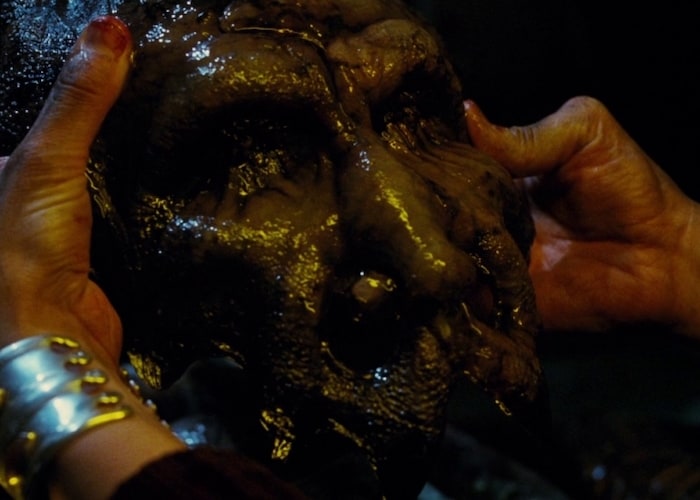
Synopsis: The original murderous body parts possession tale! An experimental transplant gives an injured concert pianist the hands of a murderer. And after the operation, the pianist is seized by the uncontrollable urge to kill. Oops!

The Hands of Orclac is a German Expressionist classic featuring the face of the movement, Conrad Veidt, as the unlucky concert pianist Paul Orlac, a man who has his hands crushed in a horrible railway accident, only for things to get much, much worse when he receives a transplant from a known murderer. With a confident disregard for Cartesian dualism, the hands appear to have a mind of their own, and Orlac soon develops a fascination with knives, so to speak. Is Orlac really falling prey to the will of his transplanted mitts, or has he been craving violence all along? Which is worse?

Under the direction of Robert Wiene (who’d worked previously with Veidt on The Cabinet of Dr. Caligari), The Hands of Orlac is a masterwork of the macabre that pits a man’s own body (well…kind of ) against himself. A blur of self and body, desire and control, The Hands of Orlac is a worthy progenitor of the body horror sub-genre. Don’t let its age fool you: there is an inherent terror to the stuttery rhythms of silent cinema.

Available on Criterion Channel March 26th.

How to not to solve a plague, according to Guillermo del Toro

Mimic

Synopsis: A plague carried by cockroaches threatens to wipe out the children of New York City. There’s only one solution: make a genetically engineered bug that can mimic and destroy the diseased roaches. What could possibly go wrong?

Mimic may very well be Guillermo del Toro’s least-seen film. And considering the director effectively disowned this sophomore feature of his after constant fighting with the Weinsteins, it’s no surprise that the 1997 release has slipped through the cracks of many a watchlist. While undoubtedly a studio potboiler, for what it is, Mimic has a lot to offer. Including hard proof of the perseverance for del Toro’s quintessential “fetish for insects, clockwork, monsters, dark places, and unborn things.Mimic is fascinating and flawed; approach it as one would the site of a crime. (And, for bonus marks, track down and listen to del Toro’s commentary on the 2011 Director’s Cut, it’s very good).

Leaving Hulu March 31st.

Trickle Down Trash-enomics

The Platform

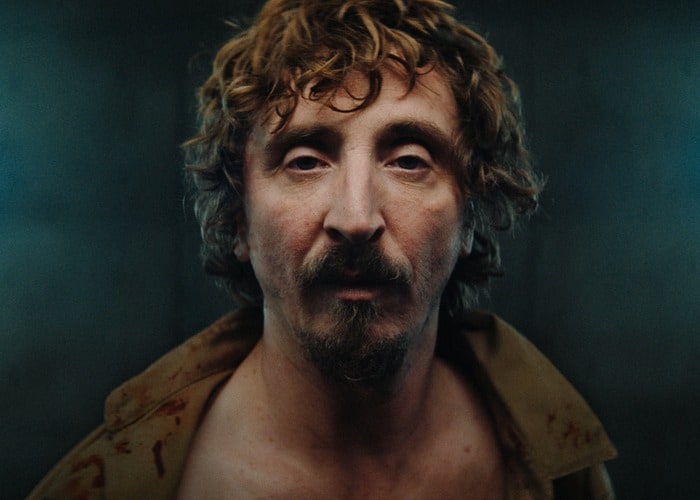
SynopsisIn this satirical Spanish sci-fi flic, inmates are fed via a platform that slowly descends their tower-like prison, with each level containing an individual cell and two starving occupants. A supposedly fair system if each inmate takes their fair share, the practice inevitably favors the higher-up leaving those on the lower levels to scrounge. 

The Platform won the People’s Choice Award at TIFF’s Midnight Madness program of underground and cult films last year. And considering it was up against the likes of Color Out of Space, Saint Maud, and The Vast of Night, that means it rips pretty dang hard. Rising above (haha) the simplicity of its allegory, The Platform is nevertheless rife with thrills, twists, and a pitch-black comedic tenor. It’s one hell of a ride and one of the most disgusting displays of avarice in recent memory.

Available on Netflix March 20th.

A campy look at inner demons from SpectreVision

Daniel Isn't Real

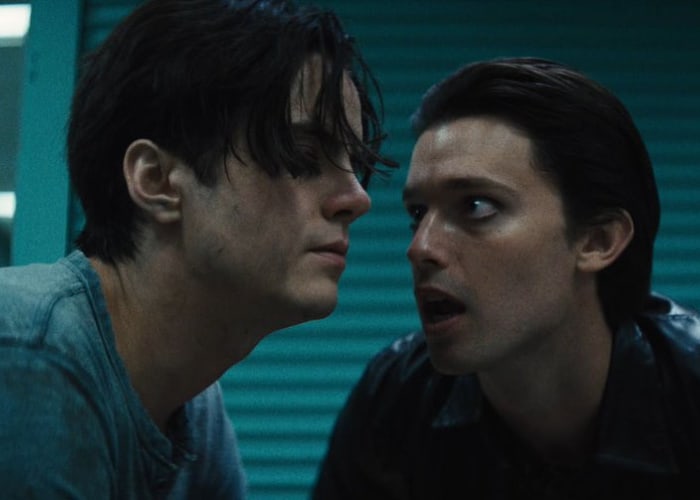
Synopsis: Luke is a troubled young adult with a dark past and an unquiet mind. And by an unquiet mind, we mean a psychotic imaginary friend named Daniel, who comes back into Luke’s life with horrifying results. Things only get worse as Luke starts to suspect his “inner demon” might be…more literal than he’d originally thought.

Daniel Isn’t Real is one of the most anticipated horror films of 2020. Or at least, it is for anyone who’s been keeping a close eye on SpectreVision, the exciting studio behind the likes of Mandy and A Girl Walks Home Alone at Night. It’s the latest offering from the esteemed genre house, and with Adam Egypt Mortimer at the helm, there’s plenty to entice. He and the SpectreVision boys are now in the process of trying to arrange a crack at a Nightmare on Elm St. film, which is all to say, the word on the street is he’s a director to watch.

Daniel Isn’t Real has a lot to offer, but it won’t be everyone’s cup of tea. The film boasts some really gnarly creatures effects, another brilliant SpectreVision OST, and rock-solid performances from Miles Robbins (as Luke) and Sasha Lane (as Luke’s love-interest, Cassie). It’s also a lot campier than I think most folks are expecting. Patrick Schwarzenegger is the chief offender and plays Daniel like an alien who’s just watched every single erotic thriller the ’90s ever produced. So, if you’re sympathetic to its goofiness: Daniel Isn’t Real is a good time.

Available on Shudder March 26th. And or the extra-interested, Mortimer’s 2015 feature debut, Some Kind of Hate, arrives on Shudder March 23rd.

Fresh Blood: Streamable Horror Incoming This Month

Inbound horror genre titles all in one place, for your streaming pleasure.

Netflix

Available March 1st
Corpse Bride (2005)
Resident Evil: Apocalypse (2004)
Resident Evil: Extinction (2007)

Available March 5th
Castlevania: Season 3 (2020) – Netflix Original Series

Available March 13th
Bloodride (2020) – Netflix Original Series
Kingdom (2020) – Netflix Original Series

Available March 20th
The Platform (2019) – Netflix Original


Hulu

Available March 1st
The Descent (2006)
The Descent: Part 2 (2010)
Lady In a Cage (1964)
Night of the Living Dead (2007)
Night of the Living Dead: Ressurection (2013)
Silent Tongue (1993)

Available March 6th
Knives and Skin (2019)

Available March 19th
Pet Sematary (2019)


Criterion Channel

Available March 19th
Caniba (2017)

Available March 22nd
The Cabinet of Dr. Caligari (1920)
The Golem (1920)
Destiny (1921)
Dr. Mabuse the Gambler (1922)
Nosferattu (1922)
Hands of Orlac (1924)
M (1931)
The Testament of Dr. Mabuse (1933)

Available March 29th
Repulsion (1965)
The Hunger (1983)


Amazon Prime

Available March 1st
Lady In a Cage (1964)
Night of the Living Dead (2007)
Night of the Living Dead: Ressurection (2013)
Silent Tongue (1993)
The Crazies (2010)
The Descent (2006)
The Descent: Part 2 (2010)

Available March 19th
Pet Semetary (2019)

Available March 21st
I See You (2019)


Shudder

Available March 2
Replace (2016)

Ginger Snaps (2000)

Available March 5th

The Dead Lands (2020) – Original Series; Season Finale

Available March 9th
Luciferina (2018)
Frankenstein (2015)

Available March 12th

The Room (2019) – Shudder Original

Available March 16th
Red Christmas (2016)
Howl (2015)

Available March 19th
Satanic Panic (2019) – Shudder Original

Available March 23
Some Kind of Hate (2015)
Housewife (2017)

Available March 26th
Daniel Isn’t Real (2019) – Shudder Exclusive


On Their Way Out: Horror Streaming Titles Expiring Soon

These films have one foot in the grave—bump ‘em to the top of your queue while you can!

Netflix

Leaving March 14th
Mystery Science Theater 3000 Collection 3 (1993)

Leaving March 14th
Coraline (2009)

Leaving March 30th
Paranormal Activity (2007)


Hulu

Leaving March 31st
Bug (2006)
Dracula 3000 (2004)
Jigsaw (2017)
Mimic (1997)


Criterion Channel

Leaving March 31st
A Girl Walks Home Alone at Night (2014)
The Old Dark House (1932)

Wednesday, 4 March 2020

The Science of ‘The Invisible Man’

H.G. Wells published The Invisible Man in 1897, but creators are still mining the story for inspiration to this day. Horror and science fiction tales featuring invisible characters have been churned out regularly throughout the years, several of them either new adaptations or reinterpretations of Wells’ concept about an unseen menace causing havoc. The story’s influence on the world of entertainment is undeniable. However, some people say that all of the best fiction is rooted in realism to some extent. Is that true when it comes to invisibility?

Wells’ novel has never been credited for its scientific accuracy. In the book Physics Can Be Fun, Yakov I. Perelman noted that the method of science used in The Invisible Man would cause someone to go blind as the retina would be flooded with light. That said, science fiction is far-fetched most of the time, but in the years that have followed Wells’s story, scientists have made some impressive breakthroughs in the field of invisibility research.

While scientists have determined that there are barriers that aren’t likely to be broken when it comes to invisibility, they have been able to cause some objects to disappear through the manipulation of light. The human eye is able to see because of light, and when it reflects off an object that’s in a person’s sights, it enters the eye. Essentially, then, to make objects invisible, scientists have devised materials that allows them to bend the light around objects from certain angles and remove them from the field of vision.

The first invisibility cloaking device was created by British scientist John Pendry in 2006. He and his team developed a material that deflected microwave beams around a tiny, 2D object, causing it to disappear from specific points of view. Since then, scientists have made some progress that’s been applied to larger 2D and 3D objects, but these cloaks only work from narrow angles, so they aren’t truly invisible. And they’ve never been able to make a human or an animal disappear, either.

Pendry’s research was focused on exploring the potential of metamaterials rather than trying to determine if invisibility was possible. However, as he told SPIE, people will never be able to act out their Harry Potter fantasies in real life, so they should keep their thoughts grounded when it comes to invisibility cloaks.

“Can you hide things from light? Yes. Can you hide things which are a few centimeters across? Yes. Is the cloak really flexible and flappy? No. Will it ever be? No. So you can do quite a lot of things, but there are limitations. There are going to be some disappointed kids around, but there might be a few people in industry who are very grateful for it.”

Unsurprisingly, the military is fascinated with invisibility research, and one company claims to have made a breakthrough that could be the closest thing to a true invisibility shield yet. If that’s the case, it could be the most significant advance to date. Developed by the HyperStealth Biotechnology Corp, “Quantum Stealth” is a light-bending material that can supposedly obscure objects of varying sizes, including vehicles, aircraft, and people.

The company says that the material offers “broadband invisibility” that can’t even be picked up by heat-tracing cameras. While the material does sound useful for soldiers, it’s also quite unproven at the time of this writing. Furthermore, it’s a camouflage material that makes people harder to detect, so don’t expect troops to be able to move around like the Invisible Man just yet.

True invisibility that would allow people to walk through life unseen seems impossible for now, and people should always trust the experts when it comes to these things. Still, when Wells dreamed of an invisible man, the concept was the stuff of fantasy, but if invisibility cloaking proves anything, it’s that the author’s story does have some legitimate basis in reality after all.

Kelly Reichardt on How ‘First Cow’ Questions the Myth of America’s Roots

Kelly Reichardt, director of such fantastic films as Certain Women, Wendy and Lucy, Old Joy, and the Western Meek’s Cutoff, is a master at showing the intricacies of human life. Now she brings her talents once again to the American frontier with First Cow. Her latest feature, based on the novel The Half Life by Jonathan Raymond, follows two men in 19th century Oregon Territory as they try to make a life for themselves, selling oily cakes.

I talked with the legendary independent filmmaker about how she and her crew prepared for the film, what draws her to the Western genre, and what she needs from a story.

Your lead actors, John Magaro and Orion Lee, have spoken about how they immersed themselves in the location before you started production. What does that bring to the shoot once everyone is on set?

It’s nice because it doesn’t feel like everyone is sitting on a freshly built set. We were shooting in that hutch, which Tony Gasperro, our production designer, and his team built. We spent so much time there that it ended up having some life to it. I think John and Orion had talked about how, in lieu of rehearsing, the way they got to know each other was we sent them off in their costumes with a survivalist into the rain for three nights. They learned how to make fire without matches.

I had been sending John recipes from like Lewis and Clark cookbooks while he was back in Hell’s Kitchen in New York. So, he had been cooking for a while with the ingredients that would be available to him. He was in Cookie mode. Orion was doing some stuff in London, too. He had done something crazy to help him get comfortable with the heights. Anyway, they needed to become comfortable in those clothes, learn the traps, and make sure things felt natural in their hands. John Magaro used it as an excuse to smoke a million hand-rolled cigarettes. For me, that’s what we do instead of rehearsing.

Did your research for this film differ from what you did on Meek’s Cutoff?

Yeah, it did. For this, there were no photographs because it was 1820, and for Meek‘s we had images. So, that made this more challenging. The people that would have been here, being from places like England, they would be surveyors. They might have done some sketches, so I was working with a research person in London. It was weird getting to know that Oregon region from the point of view of England.

Then we worked with the Grand Ronde, which was a confederation of tribes near Eugene, Oregon. They have a museum that had just opened when we were getting into pre-production, and that was a huge thing for us. They opened their library to us. They ended up, as reluctant as they were at first, being so generous to us. The canoe [in the film] is from their museum and they helped us with the language. They helped us make the cedar capes and hats. Everyone that we met, we got their family story.

Was there anything in your research that surprised you?

Meek’s was about coming from the East and discovering the West, but this was more hunkered down. Everyone is an immigrant coming by ship, besides the indigenous people. I didn’t realize how quickly the indigenous people in the area were wiped out and how long they had been able to sustain themselves on the Columbia River. I was surprised at how much of an effect that beaver trade had on the natural world of the area.

It kind of showed that America was always this place where there was always capitalism, there was always an underclass, and there was always this hubris about the natural world that it could just sustain whatever was put upon it. I always have this feeling like, “Oh, corporations took over America,” but corporations were America from the get-go. I always feel like I’m learning things that I’m sure my friends’ kids know by junior high. I’m like, “Wow, this happened!” and they’re like, “Yeah, we know. Okay.”

Cookie and King Lu’s dream feels like what people imagine the American Dream to be. Did you think about how this story would represent that at the start of America?

In a way, I feel like it’s [just] King Lu’s dream. I feel like Cookie is not that ambitious of a person. It’s weird that he’s a Jewish guy in the West, but he’s more discriminated against because he has a lack of wealth and toughness. King Lu has all this ambition, but he understands he needs to join up with a white-skinned person in order to achieve any of it. I feel like Cookie goes along with King Lu’s ambition.

I feel like something that we’ve come back to a lot in these movies is questioning the mythology of America. It’s supposed to be this place that’s open to everyone and all you need is an idea and ambition, then you too can make it to the top of the ladder. However, there’s a need for connectedness. There’s a swayed justice system. There are so many made-up roadblocks for people.

That scene in the Chief Factor’s house has a servant, who is supposed to be from the islands. Then you have a Chinese man, a Jewish man, the Chinook women, a prominent Chinook man, and then the Chief Factor is like the CEO of a company that’s come to a new place with his army of men with guns and wealth. There are so many levels where everyone falls on the power ladder. Before there is even an agreed-upon currency, there’s already a chipping order where everybody is. Some of it is quite random. The character played by Lily Gladstone is married to the Chief Factor and a Chinook woman, but then there is the other Chinook woman who is married to the prominent man of the tribe and they are on different levels, too.

Another scene I was interested in showing that dynamic was when King Lu is negotiating with the Chinook man. There are these two men confronting each other when there isn’t a question of where you’re from, who has the power? The man with the canoe. It depends on the situation.

What draws you to make films that show how money plays a large part in the lives of people who don’t have it?

I mean, the territory of what the have’s are doing, well that’s been covered. Just speaking as a woman of my age, when I first realized that I thought me and my boy pals were just going to make films, but then we had to stop at the gate, that was a heartbreaking thing of realizing how personal it can feel and how maddening it can feel that there are brakes put on people for different reasons. It doesn’t have to do with their own energy of what they can bring forward. It is a way to deal with that, to keep sussing it out in stories with people who have more at stake and more to lose.

Also, I’m interested in the strength that it takes. There’s this idea, especially in the Western, of this powerful white man, and really what strength does that take to be? Try being the indigenous woman without any money. That takes some strength. It’s a good way to work inside the formal language of narrative and also be able to skew it to show a different point of view.

What do you look for in a work of fiction that you want to adapt into a screenplay?

Jon Raymond and I are in each other’s worlds, and we have a similar political point of view and interest in people. Jon always says that our writing sessions are more like gossip sessions because we are always trying to understand everyone and figure everyone out for character reasons. I’m interested in the small moment, in the minutia of things, and in the small moment, so I tend to tell stories that happen over a short span of time.

I like that Jon’s stories deal with the natural world and commerce while talking about how those two balance each other. He writes about the internal feelings of people, and filmmaking is about having to physicalize all that. There’s room in these stories to extend and be creative. They’re not locked. There’s room for me to get in there and do my thing.

Even in the novel of this case, we had to take out a lot, but instead of just that, we kind of pulled what we wanted and put it in a simpler story structure. There was still room to create and expand inside the foundation that Jon’s giving me, which is strong characters. He really manages to say a lot in his writing with a very light touch. I never feel like I’m being told something when I read something by Jon, but it leaves me thinking.

That is something I strive for as a filmmaker, too. I felt this working with Maile Maloy’s story [for Certain Women]. Having that foundation of good characters and stories means then you can make your way into the screenplay and make that a tool for how you get to your film. It’s a big leg up.


Kelly Reichardt’s First Cow is showing in select theaters beginning March 6th.

5 Scary As F*ck Movies Streaming on Shudder in March 2020

The list of new arrivals to Shudder for March 2020 is below, but first, we’re going to talk about what scares you. In real life the answer is probably financial despair, rejection, and death, but in movies? It’s often ghosts. Most of us know they’re not real, but a talented filmmaker can find the terror in the supernatural and deliver bumps in the night that truly terrify. Sure, it might only last while watching, but delivering goosebumps, an increased heart rate, and legit fear is no small feat.

To that end, I’ve combed through the offerings on Shudder — a must-have subscription for horror fans — and have picked out five creepy chillers almost guaranteed to thrill and chill. If these movies don’t give you goosebumps… you’re already dead! So before we get to what’s new this month, let’s take a look at the five scariest movies currently streaming on the service.


The Changeling (1980)

The Changeling

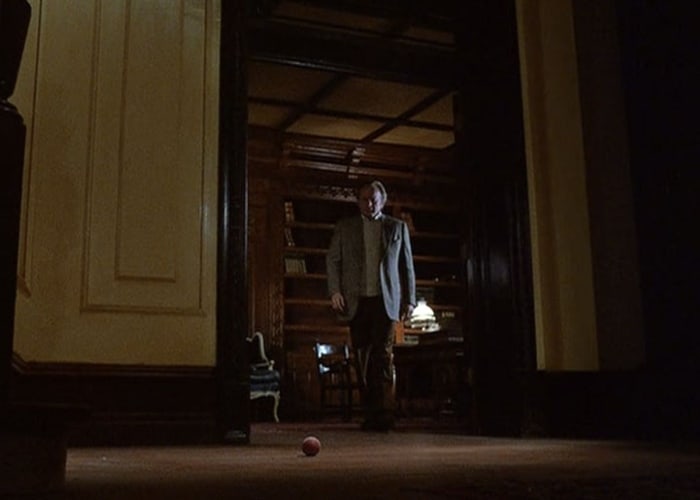
I’m sure there are people who don’t find “older” movies to be scary, but an effective horror flick is an effective horror flick. This haunted house tale sees George C. Scott rent an old home only to be drawn into its history after some spooky occurrences. Scott’s a big, gruff guy, and he’s terrific here as a man already broken by tragedy who’s forced to confront a mystery beyond death, and director Peter Medak loads the film with atmosphere to spare. The mystery is a compelling one and sees Scott’s character digging into buried secrets that set the town’s upper crust society ablaze, and his encounters with the spirit of the house are wonderfully eerie and haunting. Yes, it’s a slow burn, but give it your time and you’ll be rewarded.

A Tale of Two Sisters (2003)

Tale Of Two Sisters

It’s possible to deliver atmospheric scares without a dense backstory or fleshed-out characters, but it’s hard to deny how much fear is magnified when you care about the characters involved. Kim Jee-woon’s terrifically creepy tale sees sisters at the whim of a cruel step mother, and as our hearts break for them the hairs on our arms begin raising in spooky solidarity. Kim has shown a mastery of other genres including action and westerns, but here he slows things down to focus on the beauty and horror of it all with mesmerizing results.

Noroi: The Curse (2005)

Noroi The Curse

Found footage films, and their closely aligned neighbors, faux docs, are often a tough sell because so many of them are terrible. This Japanese entry goes the opposite direction, though, by delivering an engrossing and increasingly terrifying experience packaged in the form of a supremely competent production. This is especially impressive as the structure sets up a doc inside a doc, and even with all that finagling the damn thing still pours on the scares. Part documentary and part found footage, Noroi blends news footage, reality shows, and other clips that combine to build and maintain an atmosphere of utter creepiness. And that final image? Nightmare fuel.

The Taking of Deborah Logan (2014)

The Taking Of Deborah Logan

Like the film above, this gem of a horror film takes the form of a doc incorporating some found footage along the way, and the result is gloriously creepy right up through its already legendary finale. Even better, the film finds terror is some very relatable feelings and issues as the doc begins life focused on one woman’s descent into dementia and Alzheimer’s. There’s a tragedy to the film even as it descends into horror, and it’s incredibly effective along the way.

Terrified (2017)

Terrified

Look, I unequivocally love the four films above… but I am not a big fan of this one. So why include it? Because every other motherfucker I know claims it’s terrifying! Odds are some of you will too, so I’m giving it the shout out here. It’s an Argentinean chiller set in the neighborhoods of Buenos Aires and follows families and investigators struggling with a supernatural presence. There’s definitely some terrific imagery at play, so give it a spin some dark night and see where you land.


Here’s what’s new to Shudder for March 2020.

March 2nd

Replace (2017)
Director: Norbert Keil; Starring: Rebecca Forsythe, Lucie Aron, Barbara Crampton, Sean Knopp, Adnan Maral (Also available on Shudder Canada)

Ginger Snaps (2000)
Director: John Fawcett; Starring: Emily Perkins, Katharine Isabelle, Kris Lemche

March 9th

Frankenstein (2015)
Director: Bernard Rose; Starring: Xavier Samuel, Carrie-Anne Moss, Danny Huston

Luciferina (2018)
Director: Gonzalo Calzada; Starring: Sofia del Tuffo, Marta Lubos, Pedro Merlo, Malena Sánchez, Francisco Donavon (Also available on Shudder Canada and Shudder UK)

March 12th

The Room (2019)
Director: Christian Volckman; Starring Olga Kurylenko (Quantum of Solace) and Kevin Janssens (Revenge) A SHUDDER ORIGINAL

March 16th

Howl (2015)
Director: Paul Hyett; Starring: Ed Speleers, Holly Weston, Shauna Macdonald (Also available on Shudder Canada)

Red Christmas (2016)
Director: Craig Anderson; Starring: Dee Wallace, Geoff Morrell, Janis McGavin (Also available on Shudder Canada)

March 19th

Satanic Panic (2019)
Director: Chelsea Stardust; Starring Hayley Griffith, Ruby Modine, Rebecca Romijn, Arden Myrin and Jerry O’Connell – A SHUDDER EXCLUSIVE (Also available on Shudder Canada)

March 23rd

Housewife (2017)
Director: Can Evrenol; Starring: Clémentine Poidatz, Ali Aksöz, David Sakurai (Also available on Shudder Canada)

Some Kind of Hate (2015)
Director: Adam Egypt Mortimer; Starring: Ronen Rubinstein, Grace Phipps, Sierra McCormick, Spencer Breslin, Michael Polish (Also available on Shudder Canada)

March 26th

Daniel Isn’t Real (2019)
Director: Adam Egypt Mortimer; Starring Patrick Schwarzenegger, Miles Robbins, Sasha Lane, Hannah Marks and Mary Stuart Masterson – A SHUDDER EXCLUSIVE. (Also available on Shudder Canada)

Follow all of our monthly streaming guides.

Tuesday, 3 March 2020

The Daughter of Fay Wray Explains the Grip of ‘King Kong’ on Cinema

Movies are not the product of the gods. Movies are made by people. The confusion occurs when a film plunges into your heart and seems to fill your entire being. We find so much of ourselves in the movies that it feels like our connection with them is holy. And it is! Cinema is spiritual. The art binds us to the rest of us. Through them, we begin to understand the world outside the theater and break down the walls that divide. We praise them. We worship them. We venerate the individuals involved.

We call Fay Wray the first “scream queen.” In the original King Kong, clutched tightly in the grip of the eighth wonder of the world, the actress belted in horror like no other that came before her. In her terror, we found our own, recoiling as Kong dragged her through the jungles of Skull Island, across bottomless chasms, and battered dinosaurs lifeless. At the same time, she was a luminous beauty, and the great ape’s infatuation with her was understandable.

In 1933, King Kong was a gargantuan hit, which was no small feat as the country was in the middle of the Great Depression. Tickets ranged from 25 cents to 75 cents, and they sold by the truckload. From morning till night, seats were filled, and they stayed that way for months so folks could see the beauty topple the beast. Fay Wray entered into legend in the palm of Kong, and her name will never fade from the lips of movie maniacs.

King Kong, however, was just one of over a hundred credits to Fay Wray’s name. In fact, she made so many movies that Wikipedia can’t even be bothered to list them all. She worked with dozens of creators, in every type of movie and every kind of genre. Her face adorns our walls, and we’ll keep her name in lights until the Earth blinks out of existence, but she got there by doing everything she could to keep her family well-fed and happy.

Her daughter, Victoria Riskin, adores King Kong, but she also wants you to know that the woman that helped bring the ape into the spotlight was more than the scream queen dangling from the top of the Empire State Building. She was a worker and a loving mother. She was tremendously proud of her career and delighted in telling fans the secrets bubbling within the sauce of cinema. Fay Wray kept us happy, and in doing so, she stood guard for her family.

King Kong returns to cinemas on March 15th courtesy of TCM and Fathom Events. The film is nearly 90 years old and has been remade several times and will see some form of re-imagining this year when Kong goes up against Godzilla. I spoke to Risken over the phone, and we discussed her earliest memories of Kong, how her mother felt about the eighth wonder, why the big gorilla still resonates with audiences, and why you should see the original on the biggest screen possible. Here is our conversation in full:

What is your first memory of King Kong and hearing about your mother’s work in that film?

Well, there are two very vivid memories. I vaguely knew that she had been in a movie called King Kong, and one day when I was at my elementary school, a little boy came up to me and said, “Hey, is your father an ape?” I did not like that at all! So, I was kind of shy about even discussing the fact that my mother had been in this movie with King Kong.

Then, about that time, the movie was showing on television. I don’t know if it was Million Dollar Movie or just one of those Saturday morning shows. She said, “Do you want to watch it? Or do you feel you would like to see the film?” Then she said, “I think you’re old enough that you could see it.” And just her saying, “I think you’re old enough,” that’s all you have to say to a child. Well, of course, I’m old enough, I can see that movie.

She put me in front of the television set and I got engrossed in the story. She was a little worried about me, so she came into the room two or three times, sort of pretending she was going from the bedroom to the kitchen. Finally, towards the end of the film, she came in and I was sobbing. I was absolutely crushed, sobbing. And she said, “Oh my gosh, sweetheart, I’m so sorry. Was it upsetting to you to see your mother in such distress?” And I said, “No, I felt so bad for King Kong because he just liked you, and everybody didn’t understand that.”

I completely identified with Kong, and then I didn’t speak to her for at least two hours, because I thought she had been part of this terrible conspiracy. It touches on what I think is the genius of the original film. By the end, you have sympathy for this beast who’s been taken out of his element. He runs amuck and all because he’s in search of this little person whom he loves.

King Kong Empire State Building Screenshot

From there, obviously, your relationship with the film evolved.

No question that it evolved. Ultimately, I realized that it was a remarkable film and an American classic. I appreciated it the more I learned about the two men who made the film, Merian C. Cooper and Ernest B. Schoedsack. Their backgrounds? What adventurers they were! Then there is the role that the film played in terms of saving RKO from bankruptcy. The whole history around that film makes it so much more fun and so remarkable.

But even in my own personal life, there’s a little sidebar story. Do you mind?

No, go ahead, please.

In 1978, I went to China, when China was still very closed. It was difficult to get in. I went with a group of people hosted by Norman Lear, who was then the top guy in television. Mary Tyler Moore was in our group and a lot of notables — Larry Gelbart and Carl Reiner, and so on.

The Chinese had not ever seen any of these television stars. They didn’t know who they were. And Norman is going around the room introducing them saying, “This is Mary Tyler Moore, and she’s the most famous television star in America.” And the Chinese are looking at her like they have no interest because they don’t know anything about her.

The meeting isn’t going all that well because everyone looks kind of dead-faced. Finally, he comes to me and says, “You might know Vicky because her mother was the star of King Kong.” And they started to pound their chest and laugh. They knew King Kong! It was this great icebreaker for our trip into what was then completely closed communist China.

So, King Kong has been kind of a family friend for a little bit. If you need to influence the maître d’ at a really great restaurant, sometimes knowing King Kong can help to open those doors.

Next Page

37 Things We Learned from Rian Johnson’s ‘Knives Out’ Commentary

One of 2019’s more positive success stories was the arrival of a Rian Johnson‘s premiere Whodunit, Knives Out. He and a fantastic team of creatives both behind and in front of the camera delivered a winner that made bank at the box-office and found critical acclaim as well. Happily, it’s pretty great too.

The film just arrived on home video and comes packed with fantastic extras including a feature length making-of documentary that’s almost as long as the film itself. It also includes two commentary tracks — one with Johnson in the theater, blasphemy I know, so we’re ignoring it, and one recorded a week into the film’s release. It’s an expectedly entertaining and informative track, so of course we gave it a listen!

Keep reading to see what I heard on the commentary for…


Knives Out (2019)

Commentators: Rian Johnson (director/writer), Steve Yedlin (director of photography), Noah Segan (actor)

1. The opening shot required the two dogs to run from one trainer to another, but they initially had trouble getting them close to the camera. They ultimately had to build a little ramp so the dogs wouldn’t slide directly under the camera.

2. The opening inserts are inspired by 1972’s Sleuth, and the shot at 1:25 of Jolly Jack the Sailor is a direct reference.

3. They had to digitally paint out some of the blood they used on set for that first appearance of Harlan Thrombey’s (Christopher Plummer) dead body at 2:08 in order to secure a PG-13 rating.

4. Marta Cabrera’s (Ana de Armas) apartment was filmed in a building once frequented by a young Whitey Bulger.

5. That’s Joseph Gordon Levitt narrating the true-crime segment on we hear on Marta’s sister’s iPad in the kitchen.

6. Johnson acknowledges that despite numerous edits and attempts to shave it down, the script’s opening interrogation sequence (complete with flashbacks edited in) was “always a really tough read.” He would have people read it and adds that “I never didn’t get the note that ‘boy those first thirty pages are rough, and then it kicks into gear.'”

7. Johnson met Segan on their first film, Brick (2005), and they’ve remained friends and co-workers. “I finally wrote you a role that gets to the soul of Noah Segan.”

8. It was Toni Collette who picked the Roxy Music song that her character Joni Thrombey dances to early on.

9. They wonder if anyone notices that Meg Thrombey’s (Katherine Langford) shirt at 10:34 features a diagram of lady bits. “That might have been how we kept our PG-13,” adds Segan.

10. The beats with Benoit Blanc (Daniel Craig) playing a piano key periodically were originally written with him sitting behind Lt. Elliott’s (LaKeith Stanfield) chair and tapping it with his foot. Once they were on location, though, Johnson realized that the geography of the room afforded him the better option of the piano.

11. “I had written into the script that Blanc speaks with a subtle Southern accent,” says Johnson, and after they all finish laughing he explains that Craig researched accents and became attached to historian Shelby Foote’s cadence and drawl. “So it’s kind of that, it’s a little Foghorn Leghorn, and it’s also a little Harlan Pepper which is Christopher Guest’s character in Best in Show, which is funny because Christopher Guest is Jamie Lee Curtis‘ husband.”

12. The most impressive digital trickery will always be the work we don’t notice, and to that point the shot at 17:21 is a perfect example. It’s a simple insert of a family photo on a shelf showing Richard Drysdale (Don Johnson), his wife Linda (Curtis), and their son Ransom (Chris Evans), and it was added to ensure audiences could put a face to a name as characters were talking about Ransom before we’d actually met him. It was accomplished by shooting the framed photo in front of a green screen and then comping in one of the wide shots of the room — slightly blurred as it’s background — behind it. Works beautifully and you’d never know it was “faked.”

13. The Man Who Would Be King (1975) is one of Johnson’s favorite movies, so between takes he would try to get Plummer to talk about working with the legendary John Huston.

14. Segan and Stanfield pitched Johnson (jokingly) on a spin-off for their detective characters called Okay Cops. “And the tag line is ‘They’re fine.'”

15. They had to re-shoot the shot at 30:22 of Walt Thrombey (Michael Shannon) smoking his cigar on the porch because the character in the window behind him was too clear — it’s later revealed that it’s Marta, so they further obfuscated it by having Craig’s stand-in don the robe instead.

16. Johnson acknowledges that while the film’s first act has been “very arch… to this point” what follows comes down to the scene between Plummer and Armas. “They have to come in and land a real emotional connection between these two pretty quickly, and then they have to land this scene on an emotional level or the whole movie doesn’t work.”

17. Working out the mechanism by which to handle and explain Marta’s switching up the drugs is the script element that kept Johnson frustrated the longest. “I need something where both she and the audience crucially need to believe that she has messed up, and through her error has killed him, but it needs to be something that I can effectively undo at the end of the movie.” He says he went through lots of overly complicated variations before settling on the finished element.

18. Johnson and his wife “are big Hallmark movie fans,” and he wants to know if Danica McKellar has done a mystery film.

19. It was Don Johnson’s idea for his character to hand his empty plate to Marta as if she was the maid during the immigration conversation. It’s a great beat.

20. The painting of Harlan wasn’t finished until after filming wrapped, so every scene showing it is an effects shot.

21. Thomas Pynchon’s Gravity’s Rainbow is the first book that Johnson ever gave Segan… who has not read it yet.

22. Johnson decided early on that he wanted a PG-13 rating for the film, so he had to remove the f-bombs from his original script. He also originally wanted Plummer’s throat slice to be “a very expressive, expressionistic red splash” towards the audience, but the MPAA gave them an R which forced him to drop it completely.

23. The great Ricky Jay was originally set to play the role that is now embodied by the equally great M. Emmett Walsh. Jay died during production, so they added a black & white photo of him at 55:06.

24. The film’s key greensman, Butch McCarthy came up with The Menagerie Tragedy Trilogy on the day of filming after Johnson asked the cast and crew for suggestions.

25. Many of the family’s first names are lifted from 70s musicians to help Johnson remember them while writing. “Joni is Joni Mitchell, and her ex-husband is Neil, Neil Young. Richard and Linda are Richard and Linda Thompson. Walt and Donna are Walter Becker and Donald Fagen from Steely Dan.”

26. Johnson’s cousin, Nathan Johnson, composed the film’s score, as he’s done for all of the director’s films “except Star Wars, which he understood.” It was the composer’s first time using an orchestra, and he delivers.

27. “You had sex with my grandpa, you dirty anchor baby!” was an improv by Jaeden Martell who plays young Jacob Thrombey, but it was lost in the scene as multiple characters are talking and yelling. It was Shannon who approached Johnson and told him that Martell had a killer line, so they made sure to go back and capture it.

28. They recorded the commentary one week after it opened in theaters, and Johnson’s thrilled that Evans’ white sweater has entered the public consciousness.

29. Patton Oswalt contacted Johnson after the film opened to ask if the needle drop of Gordon Lightfoot’s “Sundown” at 1:21:47 was an intentional reference. Apparently the song is (possibly) about a groupie Lightfoot had experience with named Cathy Smith — who’s best known for being the one who gave John Belushi a fatal injection of heroin and cocaine in 1982. “And Patton, who is brilliant in his thinking in terms of 3D chess is like ‘was that a crazy reference to Marta?'”

30. Yes, that is a Brick reference at 1:32:59 in the form of tunnel graffiti on the wall to the left.

31. Ransom makes a Baby Driver reference during the car chase, and since Johnson felt “there’s no way we’re going to top anything in that” he decided to go the opposite route and deliver a silly chase.

32. Segan recalls the scene where his character grabs Evans’ upper arm “and I could not find purchase… his arm muscle was much larger than my hand.”

33. Johnson was happy to get a Stephen Sondheim reference in via Blanc’s singing a song from Follies in the car. Apparently the legendary musical theater composer was a big fan of mysteries and puzzles. “The character in Sleuth that Laurence Olivier plays… is based on Stephen Sondheim.”

34. Johnson contemplated cutting Blanc’s doughnut speech, but Craig convinced him that it was good. Watching the actor deliver it sold him on keeping the entire thing.

35. That last glimpse of Harlan’s portrait at 2:04:13 is tweaked a little “leaving everything feeling okay.” He’s now smiling.

36. Don Johnson’s black eye at 2:04:44 is a visual effect added in post-production. The shot right before of Marta holding the coffee mug at 2:04:33 is also an effect — “originally you could read the writing on the mug, and we realized it tipped it, the last shot didn’t have the same impact if you’d already seen the words… and so our effects guy basically moved her hand so it was covering the words so we got the final little reveal.”

37. Another of Johnson’s cousins, Mark Johnson — “It’s a family operation here!” — did the title credits and based the font on an Agatha Christie series of paperbacks. Zack Johnson is another cousin, and he painted the cast paintings for the end credits.

Best in Context-Free Commentary

“I play Trooper Wagner, the heart of the film.”

“If you keep your eyes peeled you’ll see the leaves come and go over the course of the movie.”

“Here’s your Hamilton moment.”

“Ah! Puking into the pig!”

“Daniel can’t whistle.”

“Anytime you see an actor eating in a movie, pity that actor.”

“Jamie Lee Curtis for James Bond. Start the hashtag.”

Final Thoughts

Knives Out is a fun film due as much to Johnson’s writing/direction as to the glorious cast, and the commentary is almost as much fun. Johnson’s tracks are always filled with appreciation and anecdotes making for entertaining and educational listens. Watch the film, watch the doc, and listen to the commentary!

Read more Commentary Commentary from the archives.